
Battling Mud and Rain: How to Protect Hardwood Floors During Vancouver Winters

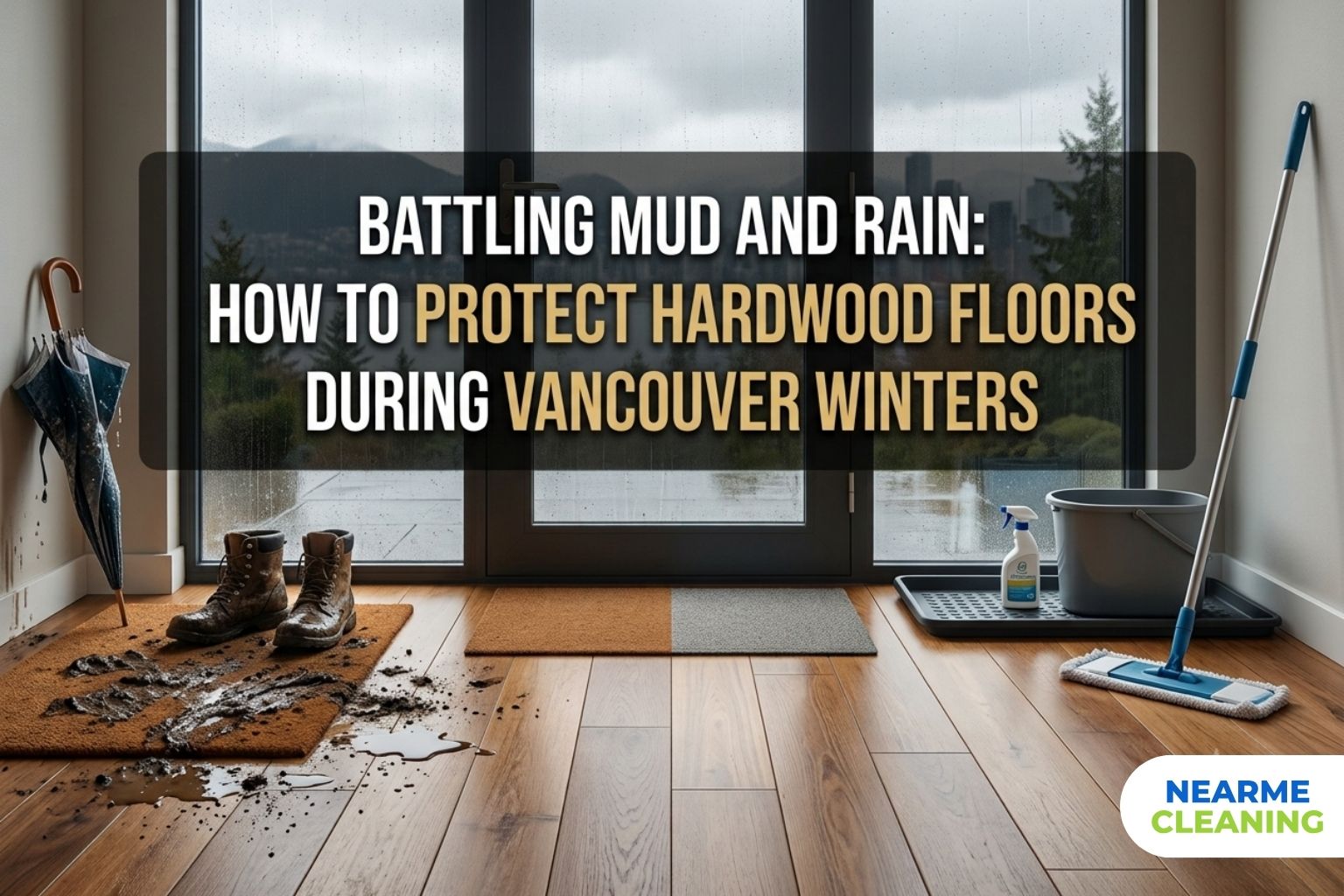
When winter arrives in Greater Vancouver, it brings months of continuous rainfall, wet boots, and damp mud tracked in from the outdoors. While Vancouverites know how to gear up with Gore-Tex and Blundstones, our homes often take the brunt of the weather—especially hardwood flooring.
Hardwood floors add natural warmth, timeless elegance, and incredible value to Vancouver homes and condos. However, natural wood is inherently porous and susceptible to moisture, grit, and temperature shifts. Left unprotected during the Pacific Northwest winter, standing water can dull your floor’s protective finish, warp wood planks, and create costly repair bills.
At Nearme Cleaning, we help homeowners across Vancouver, Burnaby, and the Lower Mainland maintain spotless, well-protected homes year-round. Here is our complete guide to safeguarding your hardwood floors against mud, rain, and winter grime.
Why Vancouver Winters Are Hard on Hardwood Floors
Understanding what damages your flooring helps you prevent it before it happens. During a typical Vancouver winter, hardwood faces three main threats:
Grit & Abrasive Sand: Mud isn’t just dirt—it contains tiny rocks, salt, and abrasive grit from city sidewalks and hiking trails. When walked on, this grit acts like fine sandpaper, scratching polyurethane sealants and exposing raw wood.
Standing Moisture & Water Pooling: Rain dripping from umbrellas, wet coats, and soaked shoes pools in entryway corners. If moisture seeps between hardwood seams, it causes cupping, crowning, or dark water stains.
Humidity Fluctuations: Outdoor dampness combined with indoor furnace heating creates dramatic humidity shifts that cause wood planks to expand and contract, opening up gaps where grime settles.
1. Implement the Two-Mat Entryway Strategy
The most effective way to protect your floors is stopping moisture and dirt before it touches your hardwood. A single doormat isn’t enough during peak rainy season.
- Outdoor Heavy-Duty Mat: Place a heavy rubber or coarse coir mat outside your entrance to scrape off heavy mud, wet leaves, and gravel.
- Indoor Absorbent Mat: Place a high-density microfiber or washable runner inside the doorway to absorb lingering moisture from shoe soles.
- Elevated Boot Trays: Set up a raised rubber boot tray with drainage ridges next to the door. Avoid placing wet boots directly on the floor or on flat cloth mats that trap dampness against the wood beneath.
Pro Tip: Enforce a strict “no-shoes” policy indoors. Asking family and guests to remove footwear at the door eliminates up to 80% of tracked-in winter debris.
2. Master Daily Maintenance: Dry Sweeping vs. Wet Mopping
During rainy months, dry debris accumulates faster than usual. Staying ahead of it requires the right routine and tools.
Microfiber Sweeping
Use a microfiber dust mop daily in high-traffic zones like entryways, hallways, and kitchens. Avoid traditional brooms with stiff bristles, which push abrasive grit across the wood surface, causing micro-scratches.
Vacuuming Safely
If you prefer vacuuming, ensure your vacuum cleaner has a hard floor setting that disengages the rotating beater bar. Beater bars designed for carpets can chip and scratch hardwood finishes.
Immediate Spill Response
Keep a dedicated microfiber cloth near your entryway. Wipe up wet paw prints, rainwater drips, or slush immediately. Never let water dry naturally on hardwood.
3. Choose the Right Cleaners (and Avoid Finish-Ruining Myths)
When it comes to washing hardwood floors in winter, less liquid is always better. Over-saturating wood floors is the primary cause of plank warping.
- Use pH-Neutral Wood Cleaners: Stick to specialized, pH-neutral hardwood cleaning solutions or light damp-mopping with a damp (not soaking) microfiber mop pad.
- Avoid Steam Mops: Steam mops force high-heat moisture deep into wood seams and micro-fissures in the sealant, causing wood fibers to swell and buckle over time.
- Skip Vinegar Solutions: While vinegar is a great eco-cleaner for glass, its acidic nature degrades polyurethane floor sealants over time, leaving wood looking dull and hazy.
4. Protect Against Claws and Furniture Scratches
Winter weather keeps pets and families indoors more often, increasing foot traffic inside the home.
- Pet Paw & Claw Care: Keep your dog’s nails trimmed during winter months. Keep a dry towel at the door to thoroughly wipe wet paws before your pet runs onto hardwood surfaces.
- Felt Furniture Pads: Check the felt pads on chair legs, dining sets, and couches. Replace worn pads to prevent furniture from pressing trapped grit into floor finishes when moved.
5. When to Schedule Professional Floor Care
While daily maintenance prevents surface damage, a professional deep clean removes deeply embedded grit from plank grooves and restores your floor’s shine without damaging sealant layers.
If your hardwood floors are looking dull from months of wet shoes, salt residue, and tracked-in mud, Nearme Cleaning provides professional residential and deep cleaning services across Vancouver, BC. Our experienced cleaning specialists use eco-friendly, wood-safe products and specialized techniques to leave your floors clean, sanitized, and beautiful.
Keep Your Vancouver Home Spotless This Winter
Don’t let Vancouver’s rainy season compromise the beauty and longevity of your hardwood floors. Contact Nearme Cleaning today to book a professional house cleaning or customized deep cleaning service tailored to your home.

Recent Posts