
 778-288-4358
Practical home care
How to clean a glass cooktop without scrubbing it raw
For ordinary cooking residue, switch the cooktop off and let it cool. Use a glass-ceramic cooktop cleaner with a compatible non-scratch pad, then remove the cleaner and buff with a clean, dry cloth. Treat stuck-on food locally instead of scrubbing the whole surface harder.
Get your price
Tell us about your clean.
4.9 Google Rating· 5,000+ Homes Cleaned
 Background-Checked
 Quality Reviewed
 100% Happiness Guarantee
 24hr Cancellation
 4.9 Google Rating
 5,000+ Homes CleanedBackground-CheckedQuality Reviewed100% Happiness Guarantee24hr Cancellation
Hot sugar or melted plastic is a separate case. Skip to the hot-spill section if that is what has happened.
The everyday cleaning method
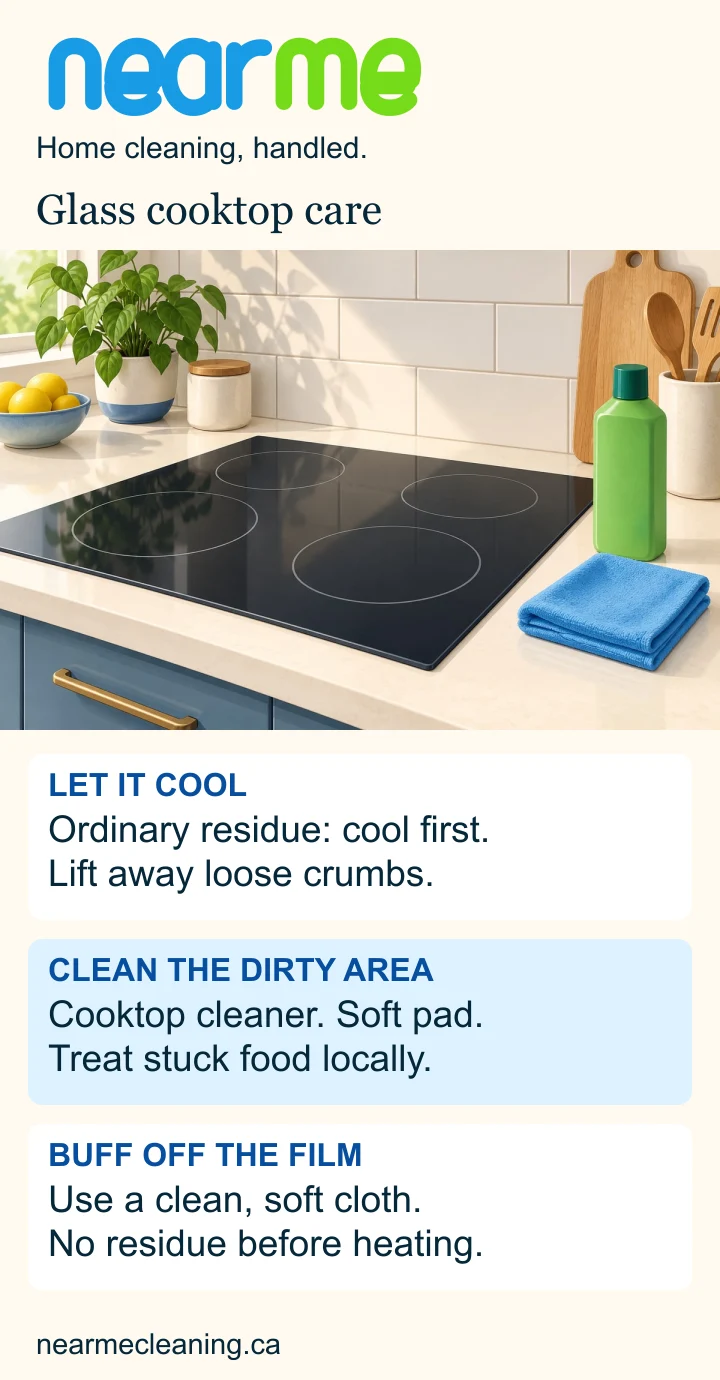
Gather a cleaner labelled for glass-ceramic cooktops, a compatible non-scratch pad and a soft cloth. A kitchen sponge's rough side is not automatically cooktop-safe.
On the cool surface, lift away loose crumbs. Apply a small amount of cooktop cleaner and work it over the dirty area with the pad. Follow that product's finishing directions: cream-cleaner routines commonly involve letting the cleaner form a dry film, then buffing it off with a clean cloth.
Remove residue around the edges of the cleaned area too. Do not heat the hob with cleaner still sitting on it. Maytag's cleaning guide describes a dedicated cleaner-and-pad method rather than aggressive scouring.
If food is still stuck on
Try another small amount of cooktop cream on the affected spot with the compatible pad. Wipe away loosened material and inspect before continuing.
Where the cooktop permits a scraper, GE's method uses a purpose-made cooktop scraper at roughly 45 degrees on cooled glass with a little cleaning cream. Keep the blade flat, not tipped onto a corner. Remove loosened residue and finish with cleaner and a soft cloth. See GE's glass cooktop instructions.
Check scraper compatibility once for your model, especially on speciality finishes. Do not substitute a kitchen knife or loose blade. If scraping is prohibited, stay with the approved cleaner-and-pad method.
Haze, metal marks and damage
For haze after cleaning, use a fresh soft cloth and the cleaner's finishing directions to remove remaining film. Adding more cream to an unbuffed layer is not the same as removing it.
Metal marks from cookware may respond to cooktop cream. Cracks, pits and deep scratches are not food residue. Stop using a cracked cooktop and arrange appliance assessment; cleaning cannot repair it.
Hot sugar or melted plastic
Switch off the elements and follow your model's hot-spill procedure promptly. GE specifies protected handling with an oven mitt and a scraper to move the spill to a cooler area; remaining residue must be removed before reheating. This is a necessary model-specific exception, not permission to wipe hot syrup with bare hands.
Do not treat a hot sugary spill as ordinary dried food and simply leave it for the next routine clean.
Keep the next clean manageable
Skip steel wool and abrasive scouring powders. Use tools intended for the surface rather than increasing pressure when the first pass does not work. For ordinary spills, clean once the surface has cooled so residue is not reheated at the next meal.
Our Standard versus Deep Cleaning guide can help you plan the wider kitchen clean.
Need help keeping the home ready for everyday life? Explore NearMe recurring cleaning.
Guide sources
Sources and further reading
Home cleaning, handled.
Need a hand with the housework?
Explore NearMe cleaning services and get a price for your home.