
 778-288-4358
Oven cleaning guide · Updated August 2026
How to clean an oven without commercial oven cleaner
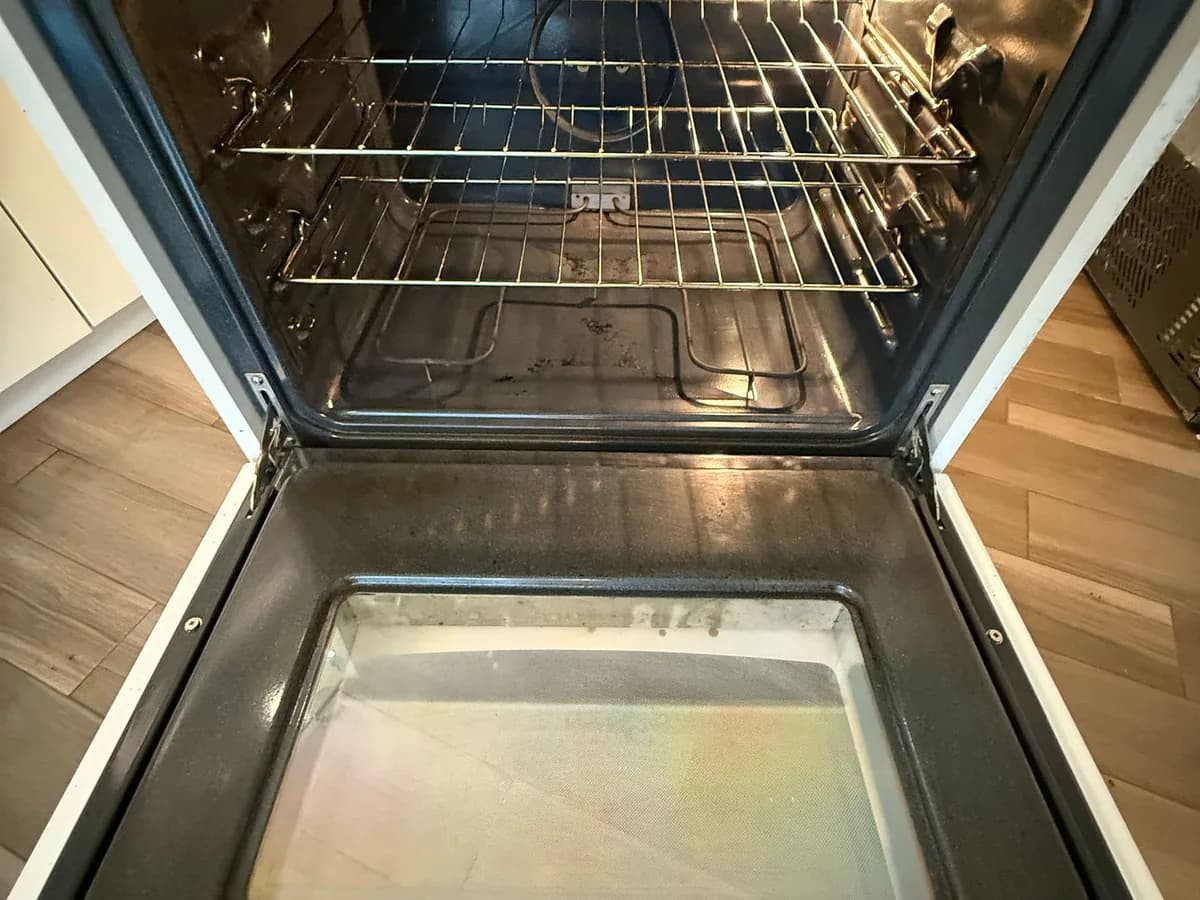
Turn the oven off, let it cool, identify the model and read its care instructions. Remove loose debris and use the approved steam, self-clean or mild manual method. Baking soda, vinegar and water are still chemicals; the real goal is avoiding an incompatible commercial product—not pretending every homemade mixture is harmless.
Get your price
Tell us about your clean.
4.9 Google Rating· 5,000+ Homes Cleaned
 Background-Checked
 Quality Reviewed
 100% Happiness Guarantee
 24hr Cancellation
 4.9 Google Rating
 5,000+ Homes CleanedBackground-CheckedQuality Reviewed100% Happiness Guarantee24hr Cancellation
The answer first
First identify whether the oven is manual-clean, steam-clean, self-clean or coated with a special surface.
Manufacturers give different instructions for racks, liners, gaskets and cleaners. A method that works on one oven can damage another, so model-specific guidance is the first step—not a disclaimer after the damage.
Use the approved mild method on a cool oven
Remove loose soil, protect elements and coatings and follow the manual for product, dwell time, tool and rinse.
Use the cycle exactly as the manufacturer describes
Steam cycles generally handle light soil; wipe the loosened residue after the oven cools.
Remove the required items and ventilate
Follow the manual for racks and heavy soil, keep the door closed during the locked cycle and wipe ash only after cooling.
Method selector
Choose by oven design and soil—not by internet popularity.
GE and other manufacturers direct owners back to the specific Use and Care manual because cleaning modes and interior surfaces differ.
| Oven type | Method | Critical check |
|---|---|---|
| Manual-clean | Approved soap/water or model-approved mild cleaner | Avoid elements, abrasives and unapproved coating contact |
| Steam-clean | Add the specified water and run the short cycle | Best for light soil; wipe after cooling |
| Self-clean | Prepare and run the locked high-heat cycle | Remove items/racks as required and wipe excess grease first |
| Special continuous-clean/coated surface | Use only the manual-approved care | Unapproved cleaners or abrasion may damage the finish |
The manual method
Use time to loosen soil instead of using an aggressive tool.
After confirming the oven permits manual cleaning, work on a cool appliance. Remove loose material, apply the approved mild solution and let the permitted dwell time do part of the work.
Remove racks as directed
Some racks can stay in certain cycles; others can discolour or warp. The model manual decides.
Protect the gasket and openings
Do not saturate electrical, fan or heating openings, and do not scrub a gasket the manufacturer says to leave alone.
Use non-damaging tools
Choose cloths, sponges or plastic tools approved for the surface; metal scraping can permanently mark glass or enamel.
Remove residue before cooking
Rinse or wipe as directed, dry the interior and ventilate before the oven returns to food use.
Do not make kitchen chemistry
Never mix bleach, ammonia, acids or separate cleaning products.
Health Canada warns that household chemical mixtures can produce harmful gases. Even when a tip uses familiar pantry ingredients, one method at a time and the appliance manual remain the safe boundary.
Read both labels
If a previous commercial product may remain, do not add another substance without following the rinse and safety directions.
Ventilate
Use windows or exhaust ventilation as appropriate and take fresh-air breaks when directed.
Stop for damage or heavy smoke
Turn the appliance off and follow the manufacturer or qualified service guidance when a cycle produces abnormal behaviour.
Avoid the rescue clean
Wipe approved fresh spills after cooking once the oven is safely cool.
Repeated heat turns a manageable spill into a baked layer. Frequent light care extends the interval between difficult oven interiors.
Use a drip strategy the manual permits
Do not line the oven floor with foil or a liner unless the manufacturer explicitly allows it.
Remove loose crumbs
A dry or slightly damp approved pass prevents debris from burning during the next cycle.
Schedule the interior deliberately
NearMe treats the oven interior as a selectable extra so it is not assumed or forgotten.
NearMe customer evidence
The useful result is a home that stays easier to live in.
Authentic Google reviews describe NearMe detail, recurring consistency and support around the appointment.
Read our Google reviews ↗“I’ve tried a couple of cleaning services in Vancouver before, but NearMe has honestly been the most reliable so far. We’ve been using them for a few months now for regular cleaning, and the difference is consistency. The cleaners show up on time, they don’t rush through things, and the place actually feels properly cleaned after they leave. What I like most is that it doesn’t feel random every time like with other companies. There’s clearly a system they follow, which makes a big difference. Pricing is fair for what you get, and booking has been pretty smooth as well. No back and forth or confusion. If you’re looking for a dependable house cleaning service in Vancouver, I’d definitely recommend giving them a try.”
“I’ve gone through a few house cleaning services in Vancouver over the years, and NearMe has easily been the most consistent. The booking process was straightforward, they arrived on time, and my home looked noticeably cleaner when they finished. It’s nice not having to follow up or remind anyone about the details. Highly recommend if you’re looking for a reliable cleaning service.”
“Prices are reasonable. Good cleaners and they provide their own supplies. You only need to supply your ow vacuum, mop, broom, etc. We initially got a cleaner who didn’t meet our standards, but they were able to send a better one after. Responsive with requests/inquiries. Had a couple of booking changes, but was able to correct within reason. Overall, good service!”
Questions before you decide
Frequently asked questions
Clear answers to the questions customers ask before choosing a service, schedule or cleaning company.
Only if the appliance manufacturer permits the method. Do not assume a popular recipe is compatible with the oven coating, gasket or cleaning mode.
No. Baking soda and vinegar are chemicals too. ‘Without chemicals’ usually means without a commercial oven cleaner; compatibility and safe use still matter.
Check the specific model manual. Some racks are designed to remain; others can discolour, warp or lose smooth movement.
Do not unless the model manual explicitly permits it. GE states commercial oven cleaner should not be used in or around parts of its self-clean ovens.
The oven interior is a selectable extra. Add it when needed rather than assuming it is automatically included.
Guide sources
Sources and further reading
- GE oven cleaning options ↗Manufacturer distinctions among manual, steam and self-cleaning ovens.
- GE self-clean preparation ↗Model-dependent rack, soil, ventilation and cooldown guidance.
- Health Canada household chemical safety ↗Read labels, ventilate, use protective equipment and never mix household chemical products—especially bleach with ammonia or acids such as vinegar.
When the guide becomes a job
Choose the service that matches the home—not the most dramatic package.
Use the checklist and price path to choose Standard, Deep, Move In/Out or recurring help. Home cleaning, handled.