
 778-288-4358
Practical home care
How to clean painted walls without leaving shiny patches
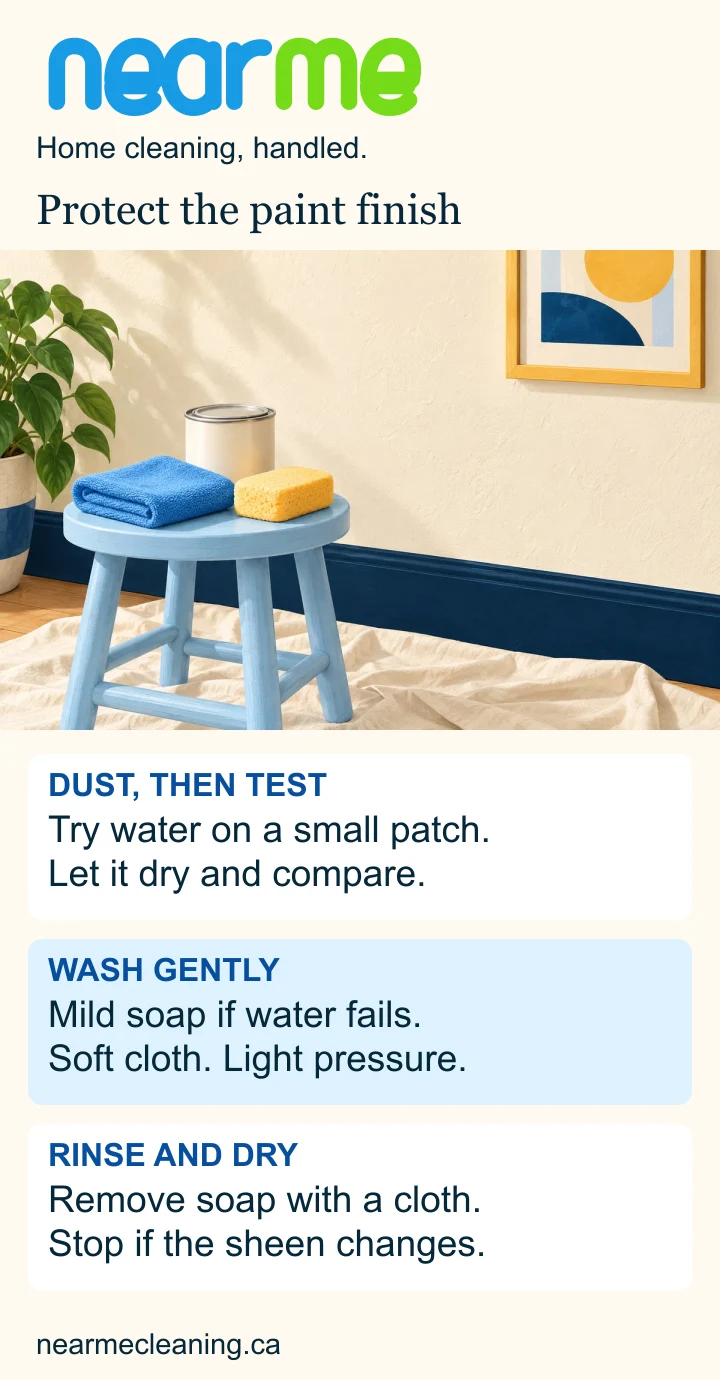
Dust the wall first. Try a soft cloth lightly dampened with plain water; if that is not enough, use warm water with a little mild dish soap. Keep the cloth well wrung out, use light pressure, remove soap with a separate damp cloth and gently dry the area.

Get your price
Tell us about your clean.
4.9 Google Rating· 5,000+ Homes Cleaned
 Background-Checked
 Quality Reviewed
 100% Happiness Guarantee
 24hr Cancellation
 4.9 Google Rating
 5,000+ Homes CleanedBackground-CheckedQuality Reviewed100% Happiness Guarantee24hr Cancellation
Before washing a larger section, let a small test patch dry and compare its colour and sheen with the surrounding paint. That check tells you whether the method is lifting dirt or altering the finish.
Start with dust, not a wet sponge
Use a clean, soft duster or a vacuum's soft brush attachment. Work gently around corners, trim and behind furniture; do not drag a gritty cloth over paint.
Gather two soft cloths, warm water, mild dish soap and a dry towel. Benjamin Moore's wall-cleaning guide recommends removing dust before washing.
Test where it will not stand out
Choose a small area behind furniture. Wring out a water-dampened cloth and make a few gentle passes. If water alone does not remove the dirt, try warm water with a few drops of mild dish soap.
Remove soap with the second cloth, dampened with clean water, then blot gently with the towel. Let the patch dry fully. Look from the side as well as straight on: a change in shine can be easier to see from an angle.
Continue only if the dry colour and sheen still match. A lighter, shinier or rougher patch is a reason to stop, not rub harder.
Wash in small sections
Use the mildest method that worked in the test. Keep both cloths damp rather than dripping. Work from the lower part upwards, catch drips, rinse each cleaned section and blot it dry.
Use gentle circular motions, refresh dirty water and rinse cloths before moving on. Sherwin-Williams' wall-care guidance also uses mild soap, soft tools and gentle handling. Flat and matte finishes need particular care with moisture and rubbing.
Fingerprints and scuffs: what to try next
For a hand mark that remains after plain water, use the mild soapy method on that spot, then rinse and dry. Inspect before repeating. A fresh cloth lets you make another gentle pass without pressing harder with a dirty one.
Do not keep attacking a scuff that changes the paint's sheen. Some marks include damaged or missing paint, not just dirt sitting on top. An abrasive eraser or paste may remove more finish along with the mark; neither belongs in a universal painted-wall recipe.
If the finish stays intact but the stain remains, choose a stain treatment specifically compatible with that paint. If paint is missing, a touch-up is the next task—not another cleaning pass.
Keep fresh paint and other surfaces separate
New paint may feel dry before it is ready for washing. Use its stated curing period rather than a generic waiting time. Wallpaper and suspected mould need a different assessment; this method is for sound painted walls with ordinary household dirt.
For the rest of your plan, see our Standard versus Deep Cleaning guide.
Want help with regular household cleaning? Explore NearMe recurring cleaning.
Guide sources
Sources and further reading
Home cleaning, handled.
Need a hand with the housework?
Explore NearMe cleaning services and get a price for your home.