
 778-288-4358
Practical home care
How to clean a stainless steel sink and remove stubborn marks
For an everyday clean, wash the basin with dish soap and a soft sponge, rinse away the soap and dry it with a clean cloth. Follow the brushed lines rather than scrubbing across them. Drying removes remaining droplets and makes it easier to see whether a mark needs separate treatment.

Get your price
Tell us about your clean.
4.9 Google Rating· 5,000+ Homes Cleaned
 Background-Checked
 Quality Reviewed
 100% Happiness Guarantee
 24hr Cancellation
 4.9 Google Rating
 5,000+ Homes CleanedBackground-CheckedQuality Reviewed100% Happiness Guarantee24hr Cancellation
If soap leaves mineral deposits or rust-coloured stains behind, use a stainless-steel stain cleaner on the affected area. Below is a specific method for plain, uncoated stainless steel—not coloured or coated sinks.
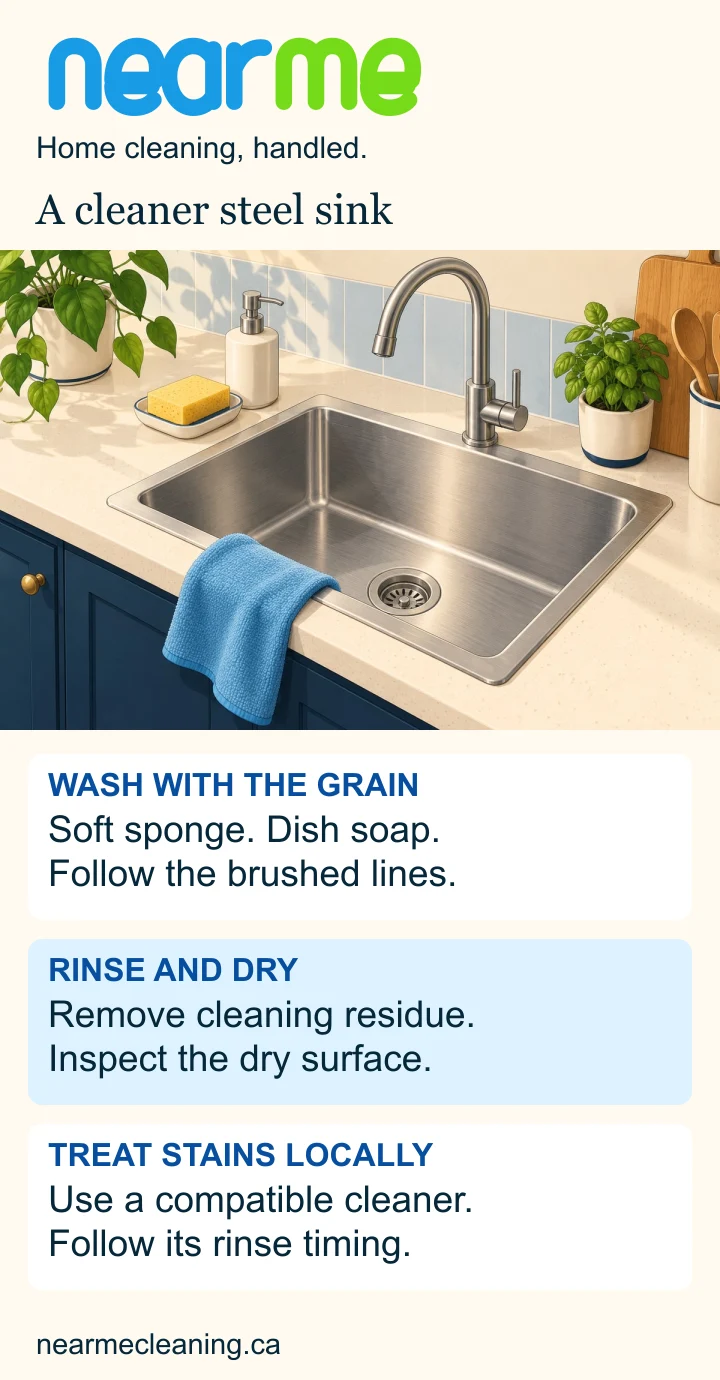
Wash the basin before treating stains
Remove dishes, the sink mat and loose debris. Wet a soft sponge, add a little dish soap and wipe the sides, base and area around the drain. Follow the visible grain. Use a cloth around awkward edges rather than a metal scouring tool.
Rinse the entire basin so no soapy film remains, then dry it with a clean microfibre cloth. This daily sequence is consistent with BLANCO's stainless steel care guidance.
Keep steel wool, wire brushes and abrasive scouring pads out of the routine. Sterling's sink guidance also advises cleaning along the grain with non-abrasive tools.
Treat remaining mineral or rust stains
One option for compatible plain stainless steel is Bar Keepers Friend Soft Cleanser. Its label covers stainless steel sinks, mineral buildup and rust stains. Do not transfer its timing to a different cleaner.
- Rinse away the dish soap. Test a small, inconspicuous area first.
- Shake the bottle and put a small amount on a wet sponge or wet stained area.
- Work gently with the grain using a soft sponge.
- Rinse thoroughly within one minute, then dry.
- Inspect the result. If the finish is unchanged but deposits remain, the label permits another application. Do not substitute a long soak or harder scrubbing.
Follow the Soft Cleanser label, including its glove guidance. Never mix it with bleach, ammonia or other cleaning chemicals. On coloured or coated sinks, use a treatment explicitly permitted for that finish instead.
What the mark tells you after cleaning
A film that disappears after rinsing and drying did not need a stain treatment. A deposit or rust stain that improves with the compatible cleanser may need another short application within its directions.
A scratch or pit is different: cleaning cannot put missing metal back. If the surface is scratched, indented or changing appearance as you rub, stop the treatment. More pressure can make the finish less even without solving the original problem.
Judge the dry result after a gentle pass—not whether the sink looks shinier while wet.
Make the next clean easier
After washing up, clear loose food, rinse the basin and wipe it dry. Clean underneath removable accessories too; a tidy-looking sink can still need attention beneath its mat or rack.
Start with a clean, residue-free surface and deal with remaining marks individually. There is no need to add an oil-polishing step to this routine.
For help deciding what the rest of the kitchen needs, see our Standard versus Deep Cleaning guide.
Want help staying on top of the housework? Explore NearMe recurring cleaning.
Guide sources
Sources and further reading
Home cleaning, handled.
Need a hand with the housework?
Explore NearMe cleaning services and get a price for your home.