
 778-288-4358
Home-care guide
How to clean and dry a mop head
Rinse out hair and grit, wash the mop head, then let it dry completely before storing it. A thorough clean removes trapped dirt and soap residue from the fibres. Washing the bucket matters too: otherwise, your clean mop goes straight back into dirty equipment.
Get your price
Tell us about your clean.
4.9 Google Rating· 5,000+ Homes Cleaned
 Background-Checked
 Quality Reviewed
 100% Happiness Guarantee
 24hr Cancellation
 4.9 Google Rating
 5,000+ Homes CleanedBackground-CheckedQuality Reviewed100% Happiness Guarantee24hr Cancellation
Check which parts can be washed
Check the care label for two things: whether the head can go in the washing machine and the permitted wash temperature. A removable head is not automatically machine-washable. Use the instructions for your particular refill, including any plastic fitting that stays attached.
| Your mop | Where to start |
|---|---|
| Flat pad | Remove it from the mop plate. Use the hand-washing or machine-washing method below if the pad's label permits it. |
| String head | Detach a washable refill using its release fitting. Leave the handle out of the washing machine. |
| Fixed or sponge head | Clean the washable head by hand. Keep the handle and squeezing mechanism out of the washing machine. |
| Disposable pad | Replace it as directed rather than laundering it. |
You will need clean water, a basin or clean bucket, the appropriate detergent and somewhere to air-dry the head. For a hand-washable head, a little mild dish soap is enough to start with.
Rinse away loose dirt first
Empty the used cleaning water according to the floor cleaner's label. Pick out hair, threads and larger pieces of debris. Rinse the head under clean running water until the water runs clear, gently opening the fibres to release trapped grit.
If the head comes off, use its release clips or fitting rather than pulling hard on the strands. Leave a fixed head attached for hand-washing.
How to machine-wash a mop head
- Put the washable refill in the machine, without the handle. Keep it separate from lint-shedding items, such as towels.
- Select the cycle and temperature on its care label. Add laundry detergent at the amount recommended for the load.
- Check the fibres after washing. Pick out any remaining hair or grit. If the head still feels soapy, rinse it again before drying.
For a specific example, O-Cedar recommends a cool, delicate machine cycle for its Microfiber Cloth Mop, followed by hanging or laying it flat to dry. It says not to use bleach or fabric softener. That is guidance for this mop, not a temperature rule for every refill.
How to wash a mop head by hand
- Fill a clean bucket or basin with warm water and a few drops of mild dish soap, provided the head's care label allows this method.
- Work the soapy water gently through the fibres. Keep non-washable fittings and mechanisms out of the water.
- Replace water that becomes visibly dirty. Rinse the head under clean water until no dirt or foam comes out when you gently press the fibres.
- Press out excess water. Avoid twisting microfibre strands hard or pulling them apart.
Use one cleaning product at a time. Adding bleach or another cleaner is not part of this washing method.
Give the head room to dry
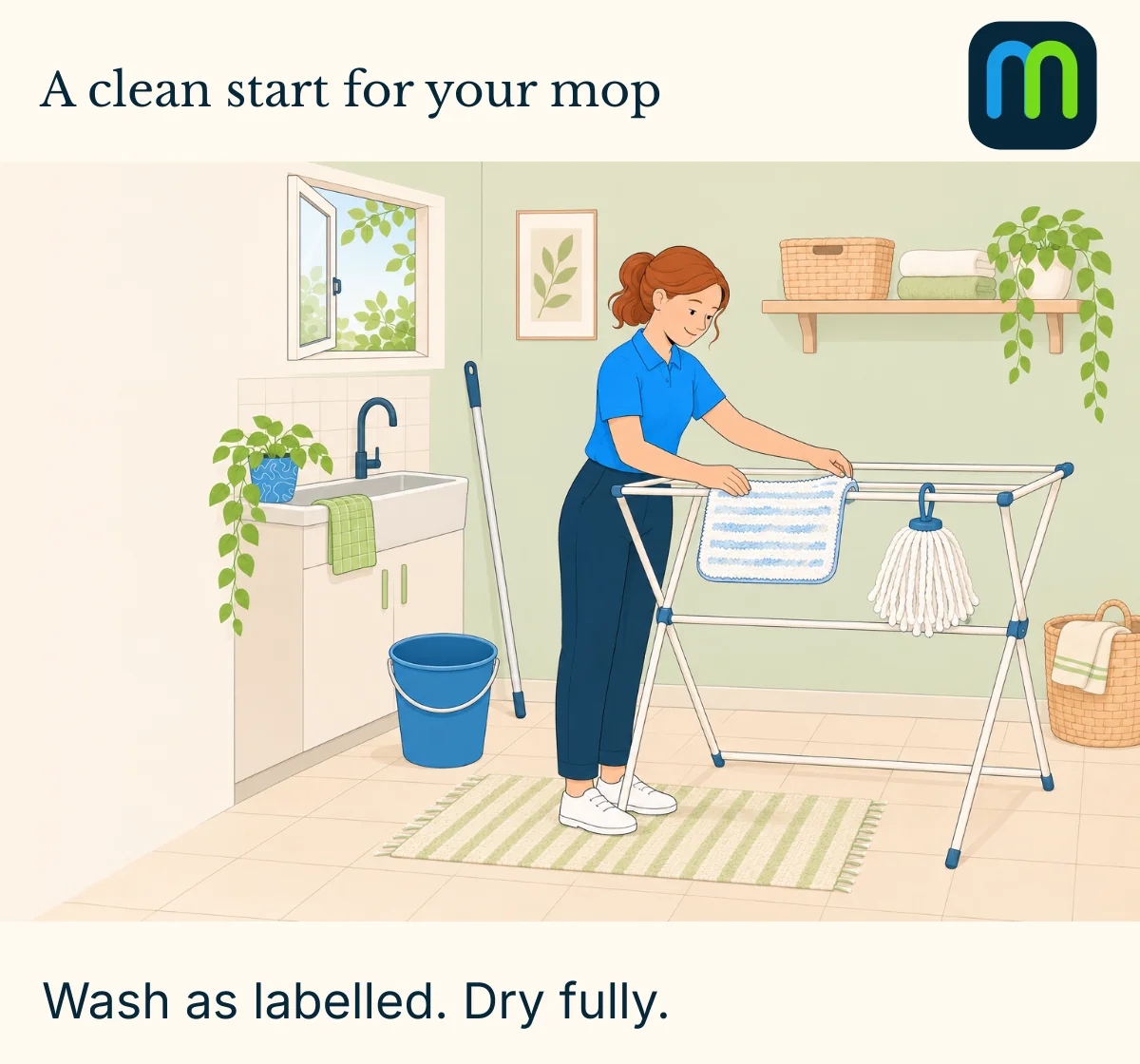
Lay a flat pad out or hang a string head with its fibres spread so air can reach them. Check the thicker parts near the fitting before putting it away: the outside can feel dry while the centre is still damp.
Do not leave the head sitting in the bucket or bundle it into a cupboard while damp. A spare compatible refill is useful when you need to mop again before the washed one has dried.
Clean the bucket and the outside of the handle
Remove grit and hair from the empty bucket. Wash its inside with mild detergent and water, including the corners and accessible wringer surfaces, then rinse and leave it empty to dry. Keep water out of powered components on electric cleaning equipment.
Wipe the handle and grip with a damp cloth. Store the dry mop with its head off the floor so it does not pick up dirt again.
When the head still looks or smells dirty
Hair or grit remains: open the fibres gently, remove the debris and rinse again. Another wash will not necessarily release a strand of hair wound around the fitting.
The fibres feel slippery or release foam: rinse out the remaining detergent. More soap is unlikely to solve a soap-residue problem.
The head smells after it has dried completely: wash it again using its permitted method and let it dry with better airflow. If the smell persists or the head is worn out and cannot be cleaned adequately, replace it with a compatible refill. Perfume does not remove the dirt causing the problem.
Can I put a mop head in the dryer?
Only if its care label permits tumble drying. Being machine-washable does not mean a head can take dryer heat. Hanging it or laying it flat gives it room to air-dry.
Will a clean mop stop every floor streak?
It removes one possible source of residue, but the floor cleaner, dilution and floor finish matter too. Follow the surface-specific method, such as our hardwood-floor cleaning guide.
Leave the regular floor cleaning to us
We bring the standard products and equipment for your selected clean, including a vacuum and mop. Explore Standard Cleaning or see cleaning prices for your home.
Guide sources
Sources and further reading
- Vileda Canada: Mop heads washing guide ↗Manufacturer guidance; the individual product label controls temperature and fitting.
- Vileda Canada: Refill care ↗Manufacturer care guidance on washing and drying refills.
- O-Cedar: Microfiber Cloth Mop care ↗Model-specific washing, drying and replacement guidance.
- Rubbermaid Commercial: Mop care ↗Mop-head removal, rinsing and drying.
Home cleaning, handled.
See cleaning prices for your home.
We bring the standard products and equipment for your selected clean, including a vacuum and mop.