
 778-288-4358
Home-care guide
How to clean dusty vent covers
Start with a soft vacuum brush or duster on the accessible face of the cover. If marks remain, check the material and finish before adding water. Some removable covers can be washed; wood, delicate finishes and fixed grilles need a different approach.

Get your price
Tell us about your clean.
4.9 Google Rating· 5,000+ Homes Cleaned
 Background-Checked
 Quality Reviewed
 100% Happiness Guarantee
 24hr Cancellation
 4.9 Google Rating
 5,000+ Homes CleanedBackground-CheckedQuality Reviewed100% Happiness Guarantee24hr Cancellation
This guide covers ordinary surface dust on heating and cooling registers and grilles. Kitchen grease filters, powered extractor fans and the inside of a duct system have their own care instructions.
Decide whether the cover should stay in place
| What you have | Best starting point |
|---|---|
| A fixed cover, or an unknown finish | Gently remove loose surface dust without taking it apart. |
| A removable, washable cover | Remove it as directed, clean it separately and dry it completely. |
| Wood or a delicate decorative finish | Follow its specific care directions; do not soak it. |
| A loose, damaged or painted-in cover | Leave removal to the appropriate maintenance person. |
Do not pry at a grille that will not lift away easily. In a rental or strata home, ask the responsible maintenance contact before removing a cover you do not own or understand. Keep routine cleaning to places you can reach safely.
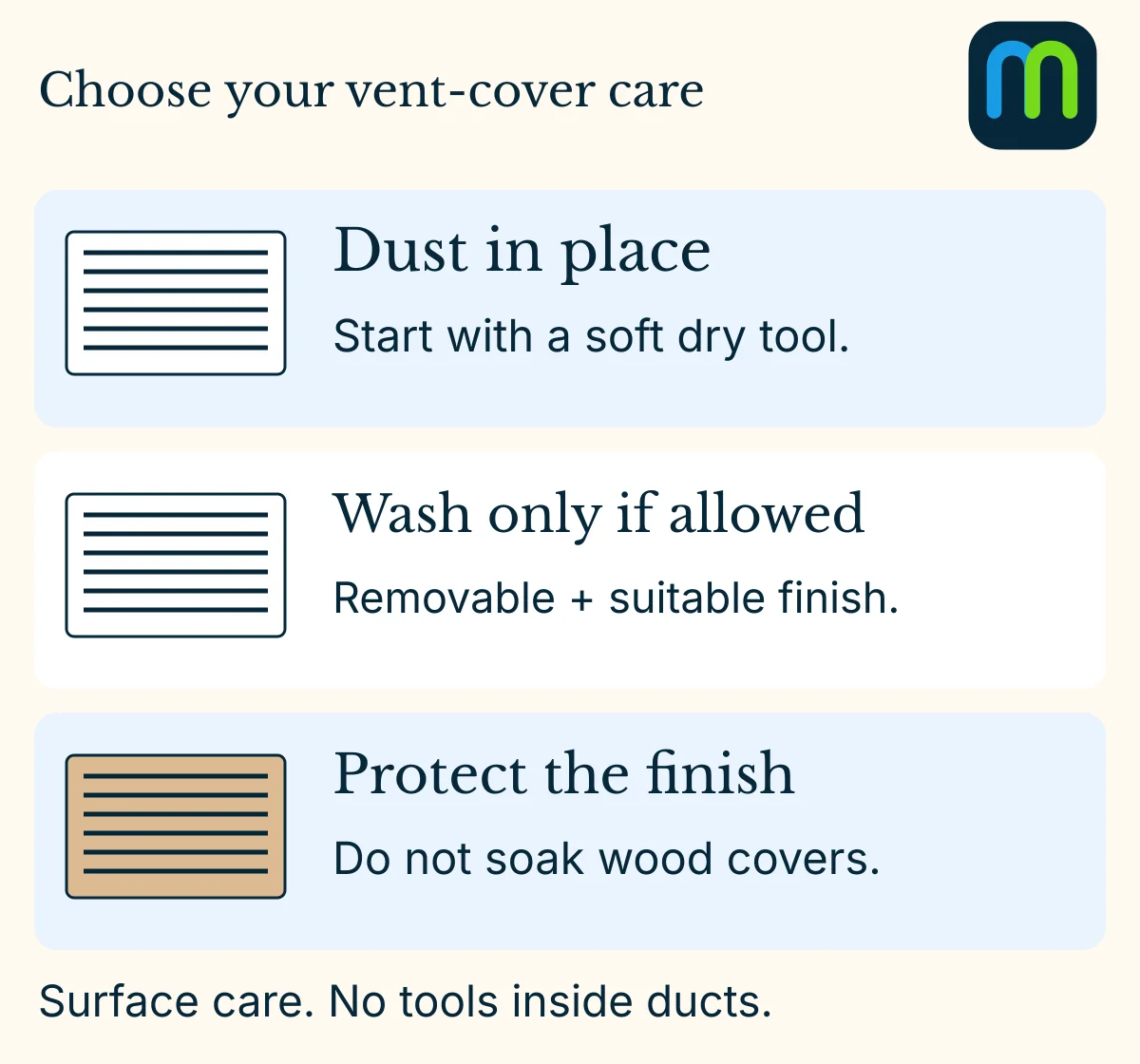
Collect the dust before using a damp cloth
Turn the heating or cooling system off at its normal control for the cleaning task. Keep the area clear, then use a clean soft-brush vacuum attachment or a dust-trapping cloth across the face and slats. Work gently so you collect the dust instead of pushing it through the opening.
Clean the accessible surrounding surface too. A brush that catches on a rough edge or loose coating can cause damage, so stop if the finish is breaking away. Do not push tools, cloths or a vacuum hose deep into the duct.
If the cover looks clean after this dry pass, there is no need to wash it simply to complete another step.
Wipe or wash only what the finish allows
For a cover that permits damp wiping, put a small amount of the recommended cleaner on a soft cloth. Wipe the slats and frame, then remove residue and dry as directed. Keep liquid out of the opening.
For a removable, washable cover, follow the maker's removal instructions and keep the screws together. Wash it separately using the permitted mild cleaner. Rinse if directed, then dry all sides and edges completely before reinstalling it securely.
Do not assume metal means rustproof, or that every painted or powder-coated finish tolerates soaking. Avoid a dishwasher, abrasive pad or strong degreaser unless the manufacturer specifically permits it. Wood covers should not be submerged.
Once the cover is dry and secure, clear the work area before restoring the system's normal setting. Vacuum any dust that fell onto the floor last.
A dusty cover does not diagnose the ducts
The US Environmental Protection Agency explains that dust on return registers is normal and does not by itself show heavy contamination inside the ducts. Cleaning the visible cover is a different task from inspecting or cleaning a heating and cooling system.
If you notice suspected mould, pests, persistent dampness or debris blowing from a supply register, contact the appropriate building or HVAC professional. Do not spray a disinfectant into the opening or improvise an extra filter behind the cover.
Vent-cover cleaning questions
How often should I clean the covers?
Check them during normal dusting and clean when buildup appears. Keep nearby floors clean as well, especially around floor registers. A cover that gathers dust quickly may need attention more often than one in a quieter room.
Can I clean a cover without removing it?
Yes, ordinary loose dust can often be collected from the accessible face. Removal is only useful when the cover is designed for it and you can handle and refit it safely.
Does NearMe clean inside air ducts?
No. Our home-cleaning packages cover accessible vent surfaces, not the inside of the duct system.
Include the overlooked details in your move clean
Our Move-In and Move-Out Cleaning includes accessible vent surfaces alongside the rest of the agreed clean. See our hidden dust traps checklist for other easy-to-miss spots, or see cleaning prices for your home.
Guide sources
Sources and further reading
- US EPA: Air duct cleaning guidance ↗Distinguishes normal dusty registers from a demonstrated duct problem.
- Reggio Register: Cleaning vent covers ↗Manufacturer guidance on surface dust removal and complete drying.
- Vent Covers Unlimited: Care by material ↗Care guidance for wood, metal and plastic vent covers.
Home cleaning, handled.
See cleaning prices for your home.
Our Move-In and Move-Out Cleaning includes accessible vent surfaces alongside the rest of the agreed clean. See the checklist and cleaning prices for your home.